
CIMMYT and Uzbekistan Strengthen Partnership to Advance Climate-Resilient Wheat Systems

Representatives of the Uzbekistan delegation during their visit to CIMMYT
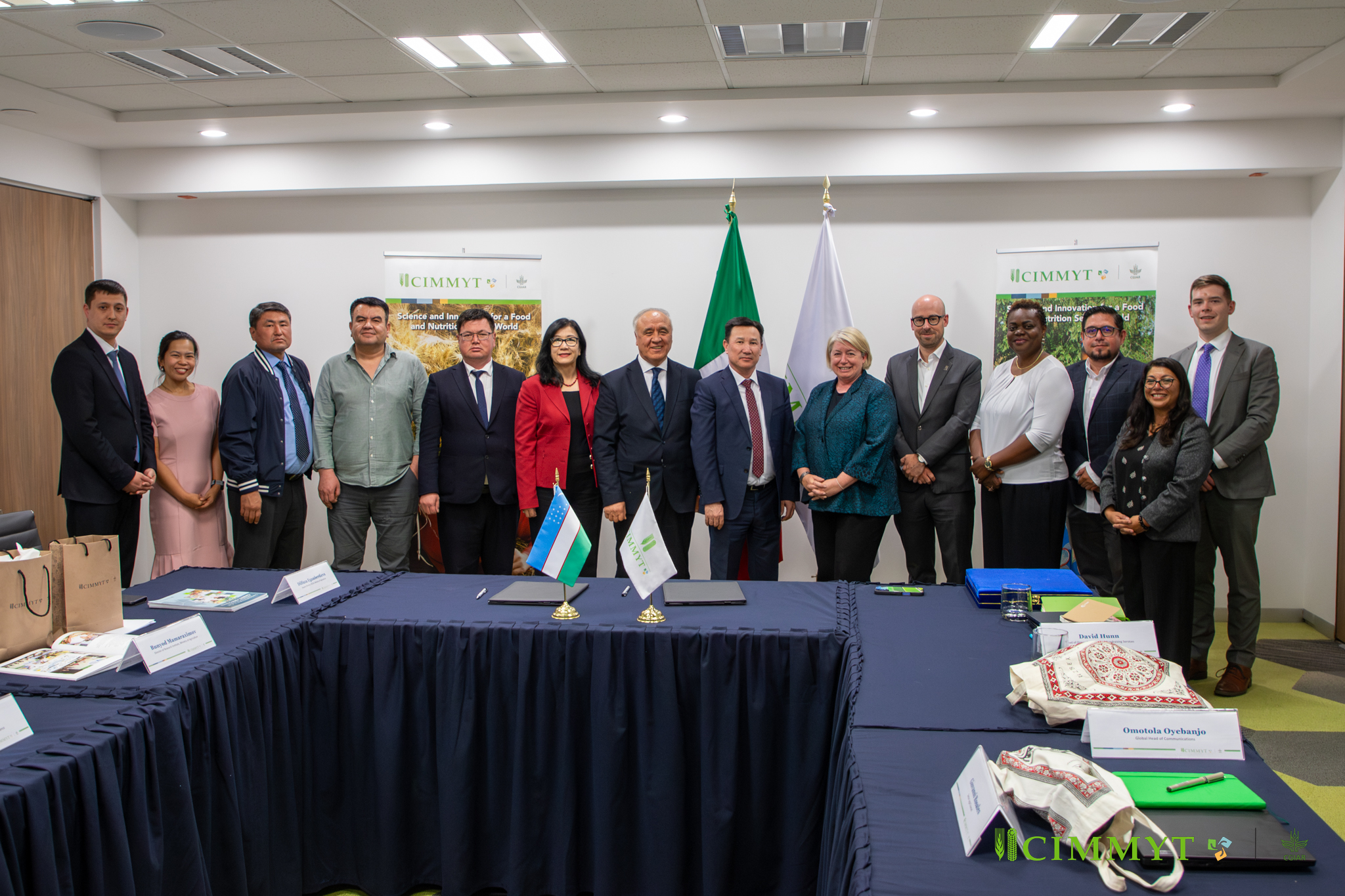
Representatives of the Uzbekistan delegation during the signing of the LoI
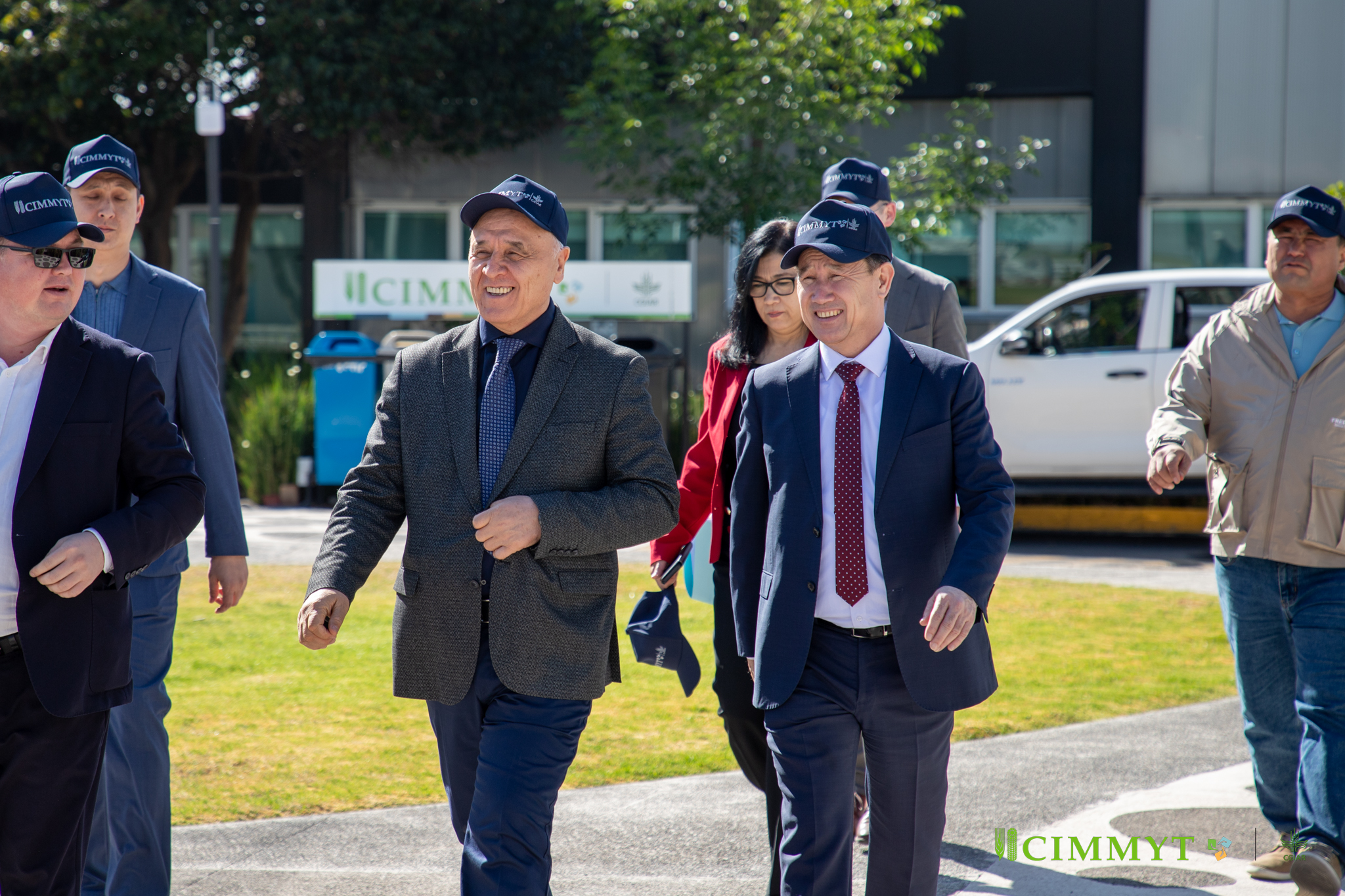
Uzbek representatives during their visit to CIMMYT
The Government of Uzbekistan and CIMMYT sign a Letter of Intent to support wheat sector modernization and food security
The agreement reflects a shared commitment to advancing science-based solutions and strengthening institutional capacity to address evolving challenges in agricultural production. It also marks a significant step in advancing CIMMYT’s engagement in Central Asia through closer collaboration with national partners and institutions.
The signing follows a high-level visit by a Government of Uzbekistan delegation to CIMMYT’s headquarters in Texcoco, where representatives engaged with CIMMYT’s senior leadership, scientists and technical teams across key research platforms.
During the visit, the delegation toured the Wellhausen-Anderson Genetic Resources Center and the Carlos Slim-Helú Bioscience Research Complex, gaining insight into advanced genomic capabilities and global wheat diversity that underpin climate-resilient crop development. The delegation also had the opportunity to see firsthand how CIMMYT’s research translates into real agricultural outcomes, including through the organization’s longstanding partnerships with Mexican farmer associations, a model that illustrates how science-based innovation can be scaled to benefit farming communities.
“This partnership marks an important step for CIMMYT to work alongside the Government of Uzbekistan in advancing agricultural development in a region central to global food systems,” said Sharon Burke, Chief Engagement Officer of CIMMYT. “It is about building a lasting collaboration rooted in innovative science and a shared commitment to food security. Drawing on our long-standing experience, including in developing drought-tolerant varieties, CIMMYT is well positioned to support Uzbekistan in addressing its agricultural priorities while ensuring farmers have the tools they need to feed communities today, in 2050, and beyond.”
“This partnership comes at a critical time, as Uzbekistan and the wider region face growing challenges linked to climate change, water scarcity, and agricultural sustainability,” said Professor Shukhrat Otajonov, Director of the Uzbek Ministry of Agriculture’s Center for Seed Development. “We are committed to strengthening our agricultural systems through science and innovation, while building on existing knowledge to deliver more resilient, productive crops. Our cooperation with CIMMYT will be instrumental in advancing these efforts, supporting farmers, strengthening food security, and extending impact across Central Asia.”
The collaboration is expected to support a range of joint efforts, including the modernization of breeding programs, the development of advanced laboratory capacity, the promotion of climate-resilient agronomic practices, the strengthening of seed systems, and the development of evidence-based policy frameworks to support Uzbekistan’s wheat sector transformation.
CIMMYT brings decades of experience in crop improvement, capacity development, and international research collaboration, supporting countries in building more productive, resilient, and sustainable food systems.
About CIMMYT
CIMMYT is a cutting edge, non-profit, international organization dedicated to solving tomorrow’s problems today. It is entrusted with fostering improved quantity, quality, and dependability of production systems and basic cereals such as maize, wheat, triticale, sorghum, millets, and associated crops through applied agricultural science, particularly in the Global South, through building strong partnerships. This combination enhances the livelihood trajectories and resilience of millions of resource-poor farmers, while working towards a more productive, inclusive, and resilient agrifood system within planetary boundaries.
Nahyane Bakkali
CIMMYT
n.bakkali@cgiar.org
Legal Disclaimer:
EIN Presswire provides this news content "as is" without warranty of any kind. We do not accept any responsibility or liability for the accuracy, content, images, videos, licenses, completeness, legality, or reliability of the information contained in this article. If you have any complaints or copyright issues related to this article, kindly contact the author above.
